Swords
Four of Swords
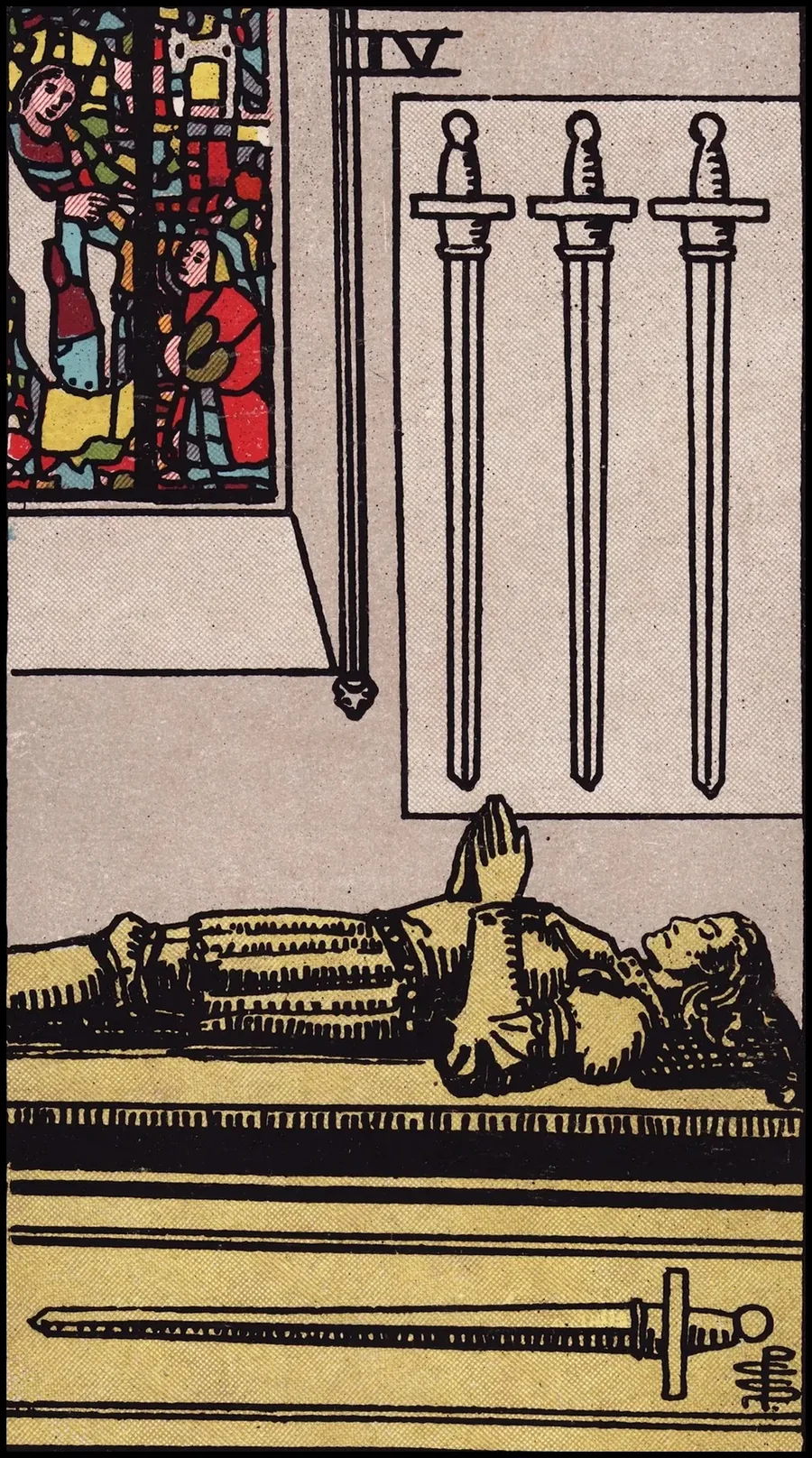
What this card is
Put aside your power.
What this card is not
This card is not about the use of power.
In Michael's words
In a Tarot reading this is a suggestion on how to introduce the Four of Swords. ‘This card is the Four of Swords. Swords are the suit of personal power, and this card is an indication that you are becoming more powerful in a certain area of your life. However, this is a card of warning and an example of a better way. Being powerful in any arena is a gift to have but not to display. You probably already know this, but the use of power hurts people and sometimes you can achieve your ends without causing pain. The Four of Swords advises a time to rest and to reconsider any offensive stance you might be considering. Put your power aside. It is there if you need it for protection, but develop your other skills for dealing with conflict. Not everything is a contest that you have to win.
The four cards forewarn us. In each suit we see a lesson and a caution about demonstration and excess. The Four of Swords tells us to rely less on power and to develop ourselves in the other suits: happiness in Cups, creative ideas in Staffs, and acquiring wealth in Coins. The Tarot cards instruct us on obtaining balance and existing on the Path of Mildness, or ‘middle road’ between excesses of Severity and Mercy.
Selected passages from Tarot By The Tree: The Kabbalistic Connection.
- Arcana
- Minor Arcana
- Suit
- Swords
- Theme
- power and its consequences
- Number / Sefirot
- 4 / Hesed (Mercy)
The number across the trees
The 4 cards reflect Hesed (Mercy). In the Major Arcana, this position is occupied by The Emperor on the Tree of Life and The Devil on the Tree of Knowledge.
Learn with Michael
Michael N. Steeves teaches Four of Swords in this Tarot By The Tree lesson.
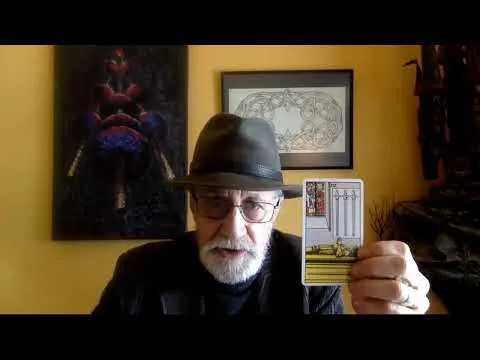
4 of Swords