Swords
Six of Swords
What this card is
Leave the arena of power.
What this card is not
This is not a card that advocates the use of power.
In Michael's words
In a reading we could explain the Six of Swords in this way: ‘The Six of Swords is telling me that at some time in your life you answered a challenge or responded to an attack. A contest of sorts ensued and in the end you were defeated. For the sake of all those involved, it may be better for you to relocate your energies elsewhere. And yet there is some good news. Despite trouble, your considerable power allows you to be mobile, protect others and quite likely thrive again. With power, we don’t have to remain attached to people or places that don’t respect our attitudes and efforts.’
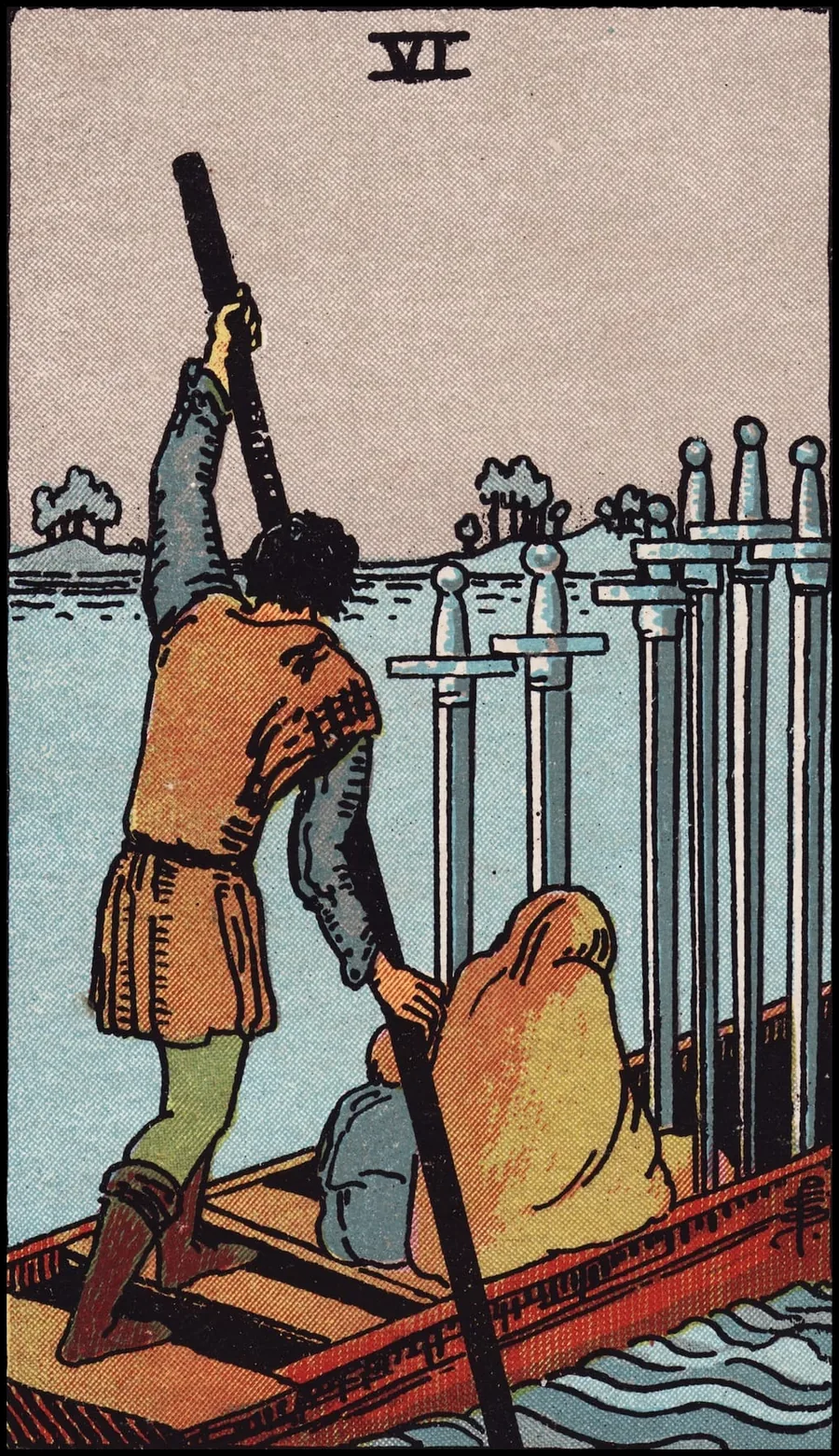
The Six of Swords shows us a man taking his family across the river in a boat. He is protecting those he loves and moving to a place of safety. On the one hand he is the hero, strong and mobile, with his family in no danger as long as he is with them. On the other hand, his past use of power may have made it difficult for his family to remain in the same place or situation as before. He is sacrificing his past for his family’s future. This, in a way, is a card of the defeated hero who abandoned displays of power for reason, safety and a new reputation. His power now is hidden and used only for defense.
Selected passages from Tarot By The Tree: The Kabbalistic Connection.
- Arcana
- Minor Arcana
- Suit
- Swords
- Theme
- power and its consequences
- Number / Sefirot
- 6 / Tifferet (Beauty)
The number across the trees
The 6 cards reflect Tifferet (Beauty). In the Major Arcana, this position is occupied by The Lovers on the Tree of Life and The Star on the Tree of Knowledge.
Learn with Michael
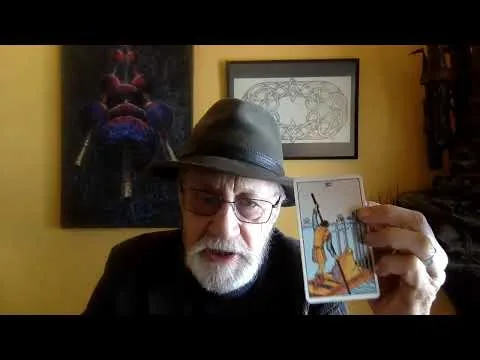
Michael N. Steeves teaches Six of Swords in this Tarot By The Tree lesson.
6 of Swords